


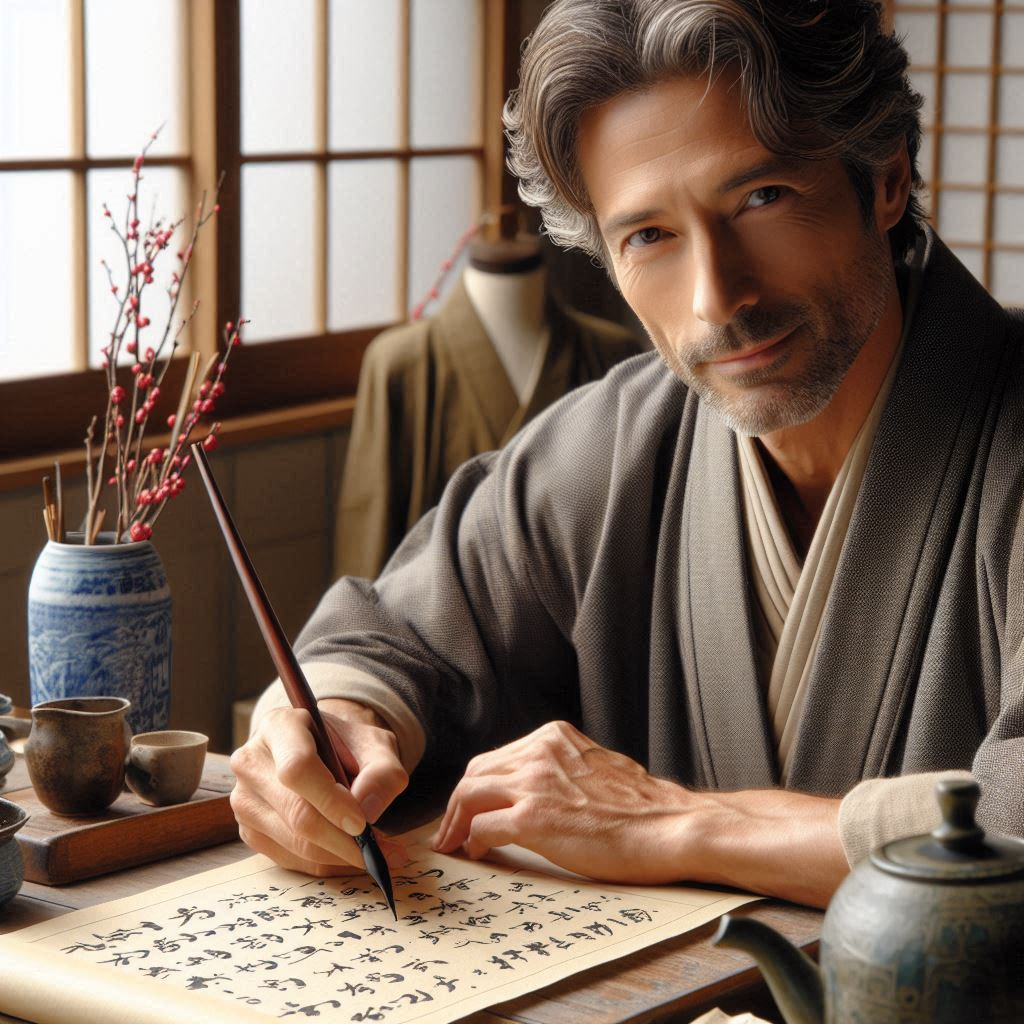
You Won’t Improve in Calligraphy If You Rely Only on Hanshi Paper
Do you truly understand
how to apply the brush’s center of gravity?
When you were a child attending a calligraphy class,
didn’t you write your characters
right in front of the teacher?
But once you become an adult,
the style changes to showing the teacher
the works you wrote at home.
In many calligraphy classes,
the teacher simply corrects your work in red
and that’s the end of it.
In some classes, there’s even a waiting room
for people waiting for corrections,
and it often becomes a place to chat
and socialize.
I’m not denying this itself. Interaction is important.
But here is what I want to ask you
“Aren’t you attending calligraphy class
because you want to improve?”
Once you join the adult section, you are assumed to already know the basics, and teachers rarely teach you
how to apply the brush’s center of gravity.
Unless you persistently ask
because you truly don’t understand,
you will not be taught.
Many of you may have already realized this, but the way to apply the brush’s center of gravity is only taught when you are a child.
What happens when you write without knowing the center of gravity
If you write calligraphy as an adult without knowing how to use the center of gravity, your work will lack contrast and look dull.
This is a sign that you don’t have proper center-of-gravity control, contrast, or rhythm.
In fact, many calligraphy learners hit a wall at exactly this stage.
- The lines lack strength
- Stops and sweeps become vague
- The overall impression becomes flat
- The work lacks a sense of movement
The Method I Taught and Practiced
Many people may wonder, “What do you mean by
center of gravity based on brush hair characteristics?”
The truth that hanshi paper is too high-performing
Ordinarily, calligraphy classes use
hanshi paper.
Hanshi is so high-performing that it automatically assists your stops and sweeps.
In other words, hanshi is covering up
your lack of technique.
You understand your true skill level when writing on Western paper
If you write on smooth paper— for example, the back of posters or calendars (Western paper)—
You likely won’t be able to control the beginning of strokes, stops, or the direction of sweeps.
Because you’ve been relying
on the help of hanshi.
What Western paper teaches you about your real ability
To put it another way, Western paper is “bad” paper not suited for calligraphy.
That is precisely why controlling the brush becomes extremely difficult.
The brush slips on the smooth surface.
Which means that unless you consciously apply the brush’s center of gravity, you simply cannot write.
The Benefits of Practicing on Western Paper
You develop the ability to control the brush yourself
Once you can control the brush, you can express your own
calligraphic technique even on Western paper.
What I want to say is: Even for a limited time, until your technique stabilizes, try writing on Western paper— especially paper that is intentionally smooth and slippery.
Specific practice methods
You can even practice on an acrylic board.
Once you can write on that, you’ve mastered the concept of applying the brush’s center of gravity.
- Use the back of a calendar
- Practice on the back of posters
- Use regular copy paper to review basics
- Write on an acrylic board
Skills you gain through Western-paper practice
By continuing to practice on Western paper, you will reliably acquire the following skills:
- Accurate brush-pressure control
- Clear awareness of stroke beginnings and endings
- Ability to freely adjust stroke speed
- Sensitivity to the brush’s ink load
Why Most Calligraphy Classes Don’t Teach This
Very few places teach to this depth.
Why I Left the Calligraphy Class
I felt that spending time drinking tea and chatting was a waste, so I quickly left the calligraphy class I mentioned earlier.
I want to get better at calligraphy.
Time is limited.
Advice for Those Who Truly Want to Improve
After 55 years of practicing calligraphy, specializing in Northern Wei-style kaisho (and clerical script), and receiving awards such as the Yomiuri Shohō Exhibition Special Prize and the Santei Calligraphy Exhibition President’s Prize, there is one thing I can say:
The essence of improvement is to face your true skill in an environment where you cannot hide behind tricks.
Practical Steps for Improvement
Step 1: First review the basics on Western paper
Take the characters you usually write and try writing them on the back of a calendar.
You likely won’t be able to stop or sweep the way you expect.
Step 2: Focus on applying the center of gravity
When placing the brush on the paper, where do you concentrate your strength? When do you release it? Practice these consciously.
Step 3: Return to hanshi for confirmation
After practicing on Western paper and returning to hanshi, you’ll notice your line quality has changed drastically.
This is your true ability.
Summary: For Those Who Truly Want to Improve
If you rely only on hanshi paper, you will never develop true calligraphic strength.
Intentionally practicing under difficult conditions is the fastest path to improvement.
Socializing is important, but if you truly want to improve, try incorporating practice on Western paper.
Time is limited. Make every practice session truly meaningful.

